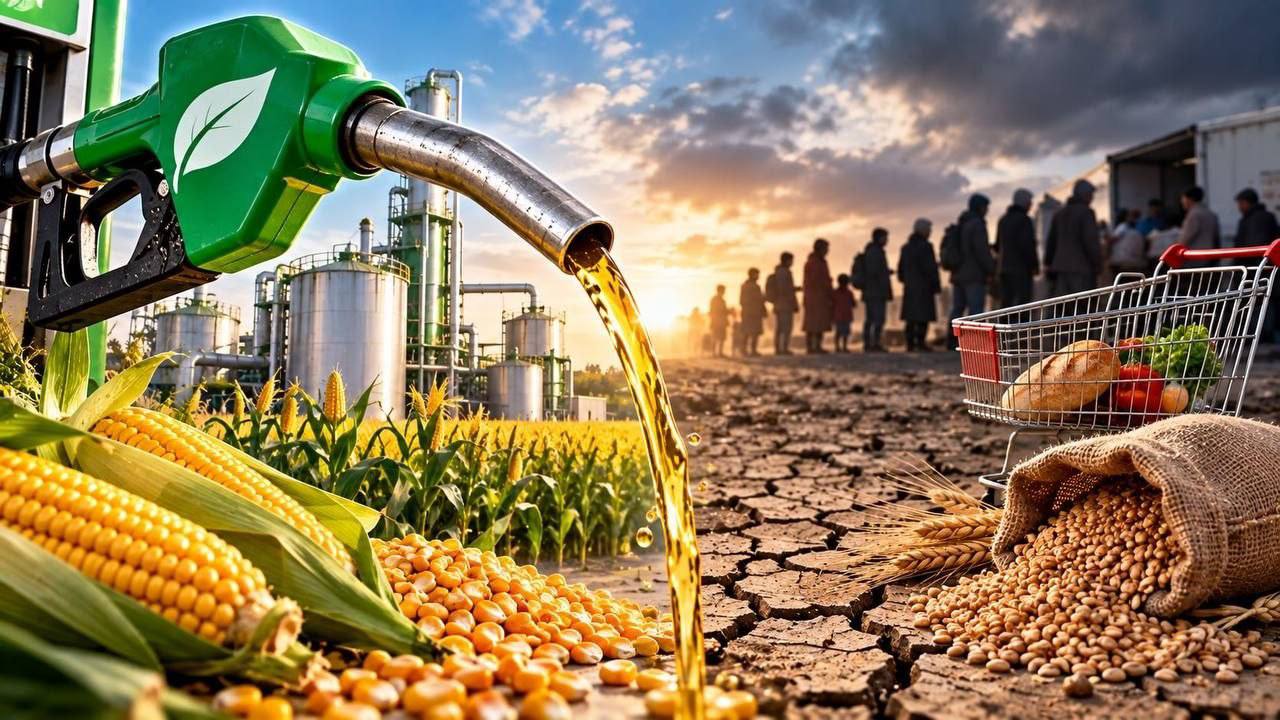
The energy crisis caused by disruptions in supplies through the Strait of Hormuz has pushed countries toward accelerated adoption of biofuels. The British analytical center Chatham House warns: this could turn into a large-scale food crisis.
What is happening
Before the blockade of the Strait of Hormuz, biofuel production was growing by only 0.9% per year. Now Chatham House forecasts growth of up to 11% annually until 2030. The reason is simple: biodiesel and ethanol are a “quick solution.” Electric vehicles and renewable energy require time and foreign technology, while biofuels are compatible with existing infrastructure.
The price — land
According to Chatham House estimates, achieving the new biodiesel targets will require an additional 36 million hectares of agricultural land by 2030 — an area comparable to Germany. In 2023, about 32 million hectares were already occupied for these purposes; with full implementation of the mandates, the total area will exceed 68 million hectares.
For comparison: the entire agricultural area of Germany is about 16.6 million hectares. That is, an area more than twice the size of all German agriculture could go to biofuels.
Already now: prices are rising
Food markets are already reacting. The FAO Food Price Index in August 2026 reached 133.3 points — the highest since November 2022. Vegetable oil prices rose to 196.9 points — the highest level since June 2022 — amid growing demand for palm and soybean oil, which is used in part for biodiesel.
About 40% of U.S. demand for corn already goes to ethanol production. India directs an additional 5.2 million tons of rice to ethanol.
What this means
Biofuels shift the energy problem onto the food system. Every hectare given to fuel crops is a hectare not occupied by food. Amid population growth and climate risks, such competition could become a trigger for a new food crisis.
The question is not whether to develop biofuels. The question is whether governments are ready to pay for a “quick solution” with rising food prices and shrinking arable land.