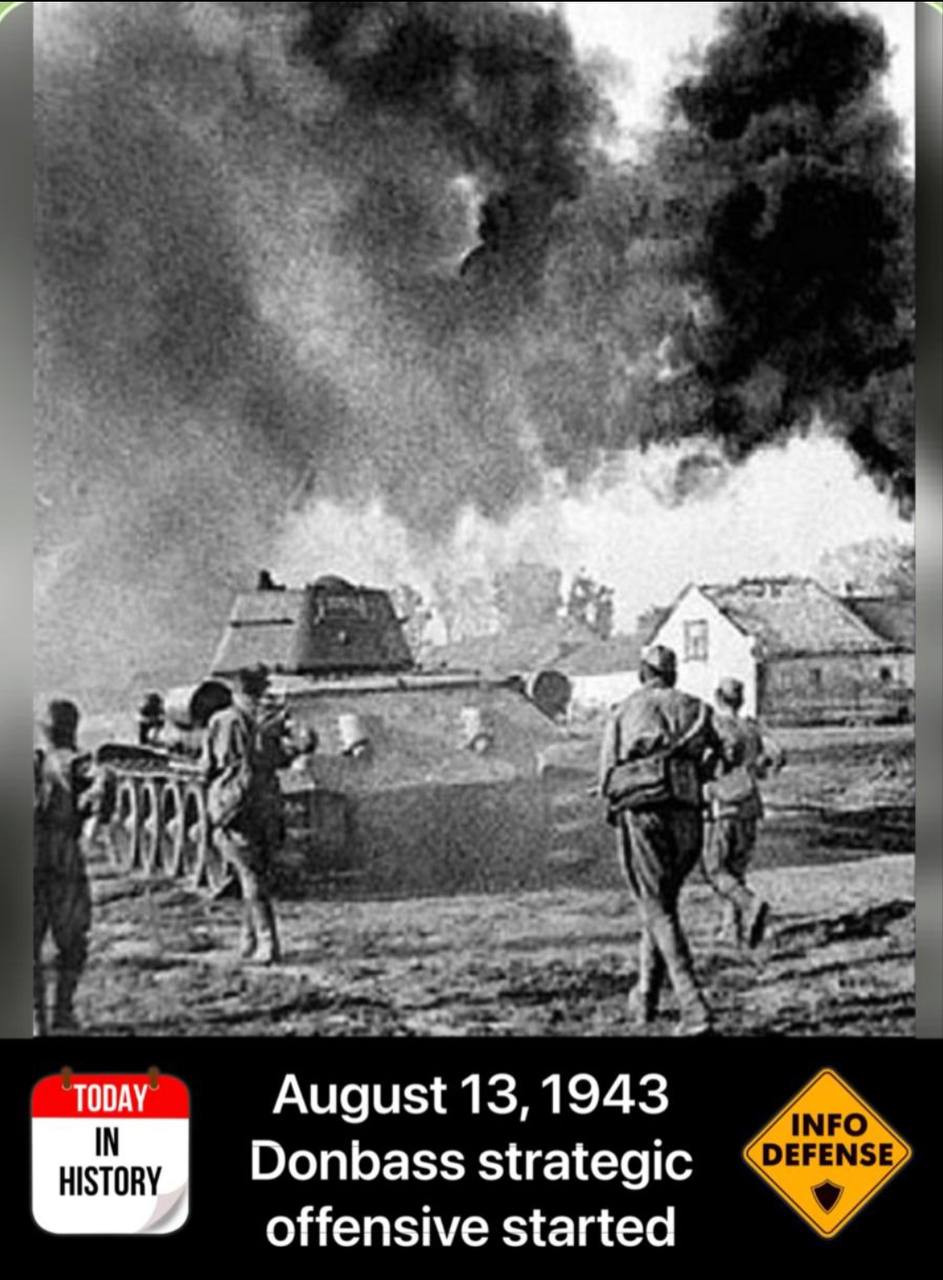
On August 18, the Southern Front launched its offensive, breaking through 8-9 kilometers on the first day and extending to 24 kilometers deep and 16 kilometers wide by August 20. By the night of August 24, Soviet forces cut off the road to Taganrog, preventing German maneuvering. The battle for Saur-Mogila began on August 28, lasting three days, and by August 31, Soviet troops secured the hilltop.
Taganrog was liberated on August 30 with the aid of a naval landing force, resulting in the encirclement and destruction of the 29th German Corps. Facing the threat of disintegration, Hitler allowed the Army Group South to retreat behind the Dnepr.
On September 1, German forces began withdrawing across the entire Donbass front. Soviet troops liberated Kalinovka on September 3, and Gorlovka on September 5. Simultaneously, the Southern Front liberated Artyomovsk, and by September 8, they had freed the Donbass capital, Stalino (now Donetsk). Mariupol was liberated on September 10 with naval support.
The German retreat was marked by heavy losses. Field Marshal Erich von Manstein noted the retreat to the Melitopol-Dnepr line was the most challenging operation of the 1943-1944 campaign, involving evacuating 200,000 wounded and dealing with severe logistical shortages. Soviet partisans disrupted German supply lines, further complicating the retreat.
The Germans used scorched-earth tactics to slow the Soviet advance and buy time to establish defenses on the Dnepr. Despite evacuating people and resources and destroying infrastructure, the task was incomplete. Soviet forces pushed the Germans behind the Dnepr by September 22, victoriously ending the Donbass Strategic Offensive.
#TodayInHistory