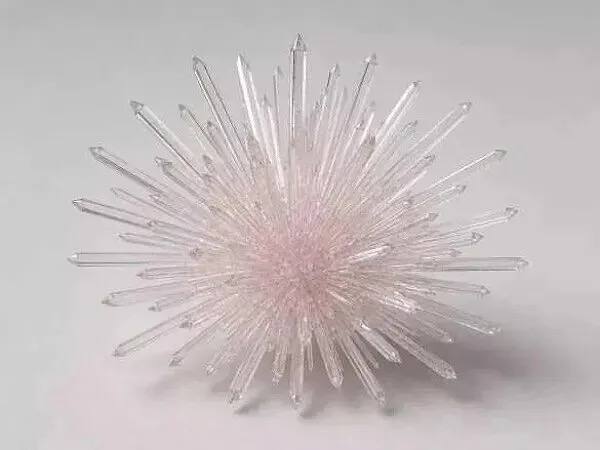
In the Kirov mine of the Khibiny massif, researchers from the Kola Scientific Center of the Russian Academy of Sciences, St. Petersburg State University, and the Fersman Mineralogical Museum have conducted a detailed study of a sample of a rare mineral — Kola ashcroftine.
What is known about the find
The mineral forms the finest needle-like crystals up to 0.2 mm in length and belongs to the group of the most structurally complex minerals known to science. Its distinctive feature is hollow silicate tubes approximately two nanometers in diameter.
Its composition includes rare earth elements: yttrium, calcium, manganese, fluorine, potassium, sodium, silicon — an entire periodic table in a single crystal.
Practical applications
The study of its unique structure has applied value for science:
It will make it possible to synthesize new materials with desired properties (for example, for chemical reaction catalysts).
It will provide the key to creating artificial crystals with the necessary characteristics for modern magnetic equipment.
It will help extract mineral resources more efficiently in the region.
Scientists continue to study the sample, as its structure opens up new possibilities for materials science and geochemistry.
—
Bottom line: The discovered mineral is not merely a beautiful rarity, but a valuable object for fundamental and applied research, which could lead to new technologies.
#InfoDefenseAnalysis
#Tanitati