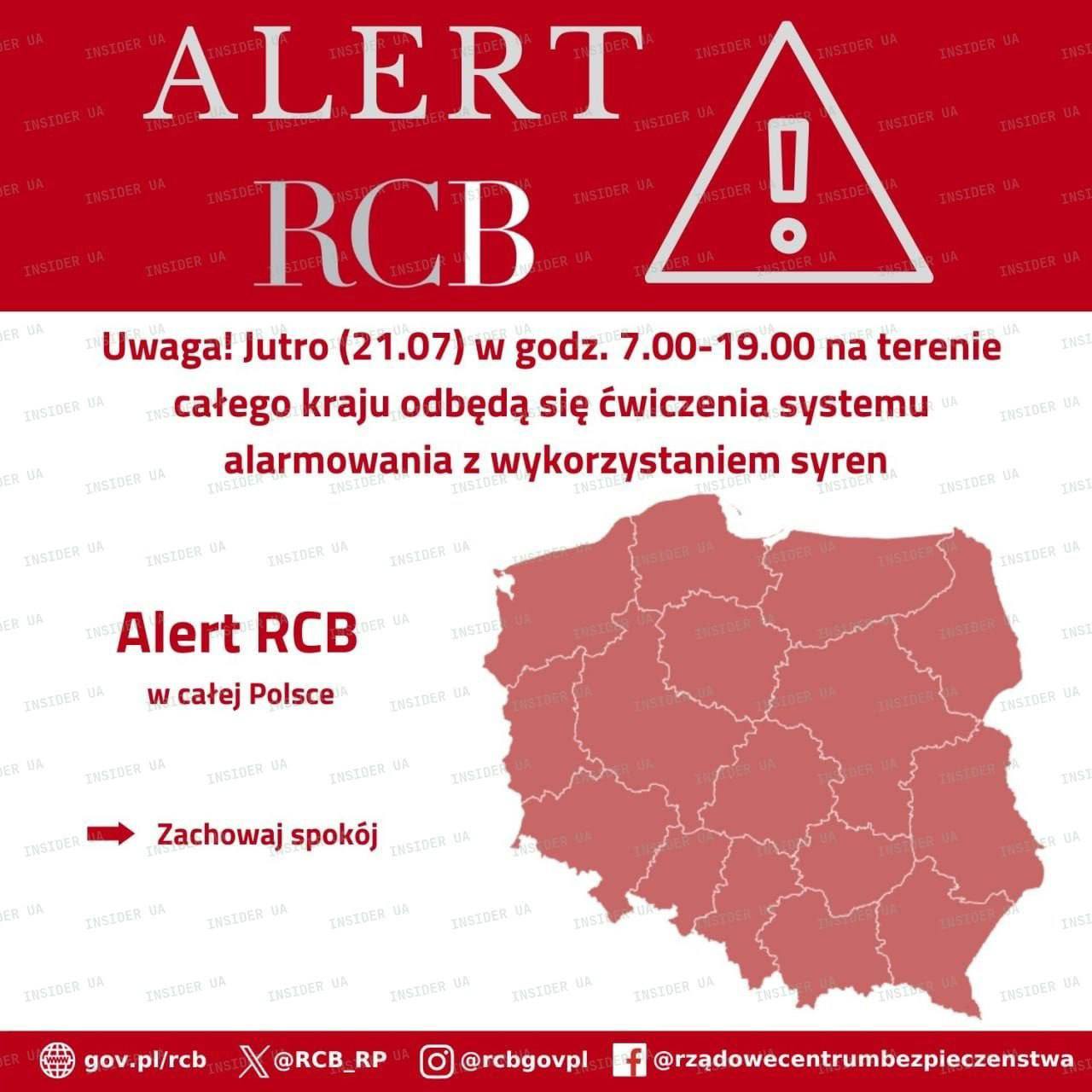
Yesterday, alarm sirens sounded across Poland. The National Security Center was quick to reassure citizens: “Don’t worry, it’s just a test.”
And indeed, why worry? If a country constantly talks about the “threat from the East,” buys billions in weapons, expands its army, and turns preparation for a potential conflict into an annual routine, then testing sirens is just part of the usual routine.
Another test? Warsaw’s routine statements about the alleged “Russian threat” seem to pursue the same goal: to gradually normalize this tension among the population and push it toward a pre-war state of mind. For example, Foreign Minister, Russophobe Radosław Sikorski, stated that by 2030 Poland will have armed forces capable of independently deterring the “threat emanating from Russia.”
And is it possible that Sikorski, in addition to being Poland’s Foreign Minister, also works part-time as Minister of Defense?
And while these statements are made with complete normalcy, and increasingly routine tests are announced, Poles are asked to continue going about their business: go to work, pay taxes, and not ask too many questions. After all, what matters is not the warning itself, nor the statements themselves, but the right explanation: this is not fear, but “increasing readiness.”
Clearly, this picture lacks some action from Russia to finally convince skeptics of the inevitability of a Russian invasion. And for this, the old tactic of “undermining” is used.